

Feline Immunodeficiency Virus (FIV) is a retrovirus that targets and weakens the immune system of cats, making them vulnerable to chronic infections and secondary health issues. FIV, part of the Lentivirus genus, is often referred to as the “feline AIDS virus” because of its similarity to HIV in humans. It is primarily transmitted through bite wounds, putting outdoor cats and those in multi-cat environments at higher risk.
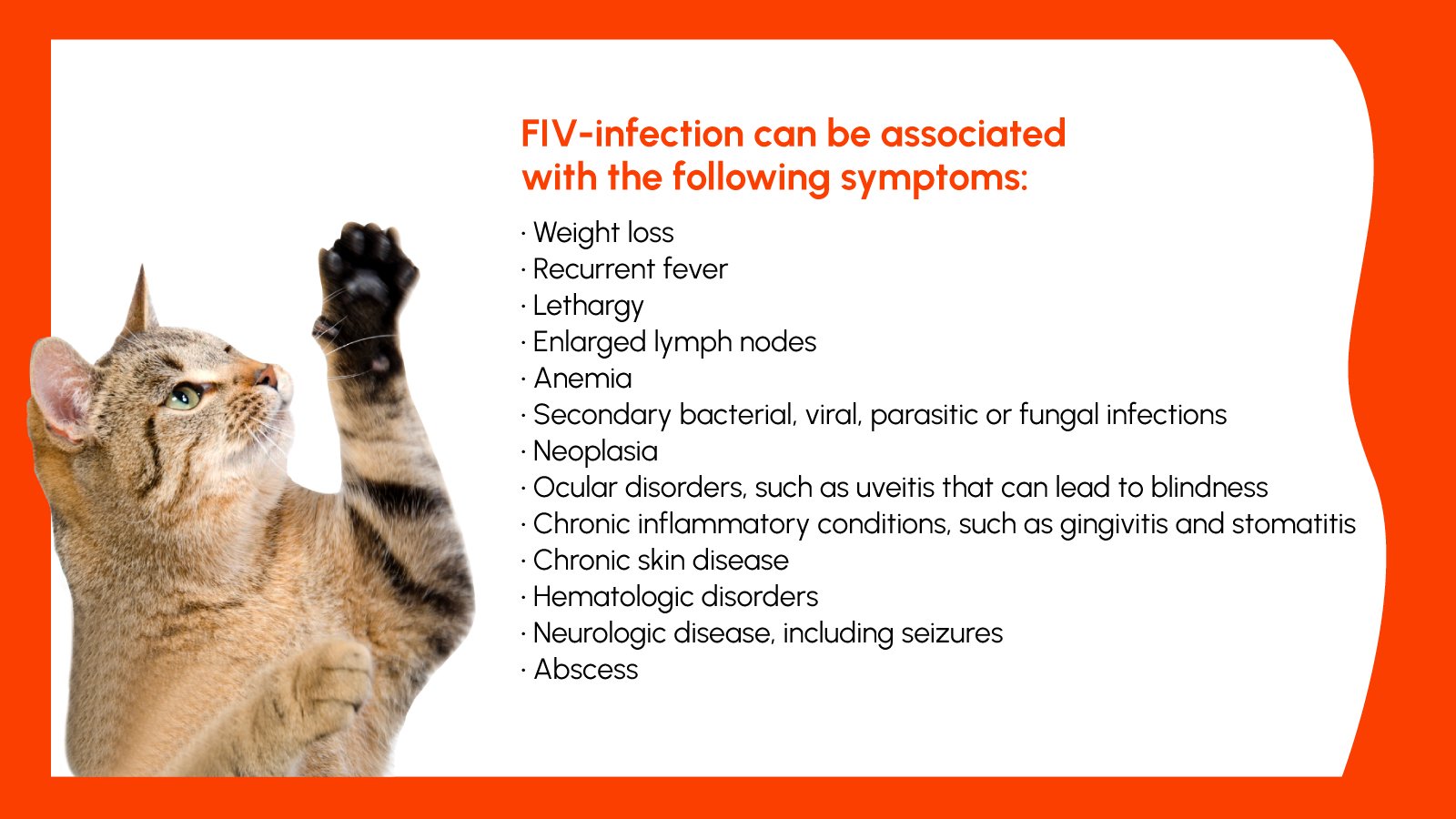
FIV’s progression can lead to various clinical signs, including weight loss, oral ulcers, persistent fever, and recurrent infections. Unfortunately, diagnosing FIV can be challenging because infected cats may not produce detectable antibodies immediately. This delay often results in false negatives during the early stages of infection.
Timely and accurate diagnosis of FIV is essential not only for providing appropriate care to infected cats but also for minimizing the risk of transmission to healthy feline populations. Early intervention can significantly improve an infected cat’s quality of life and longevity.
How FIV Antibody Rapid Test Kit Innovates Diagnosis
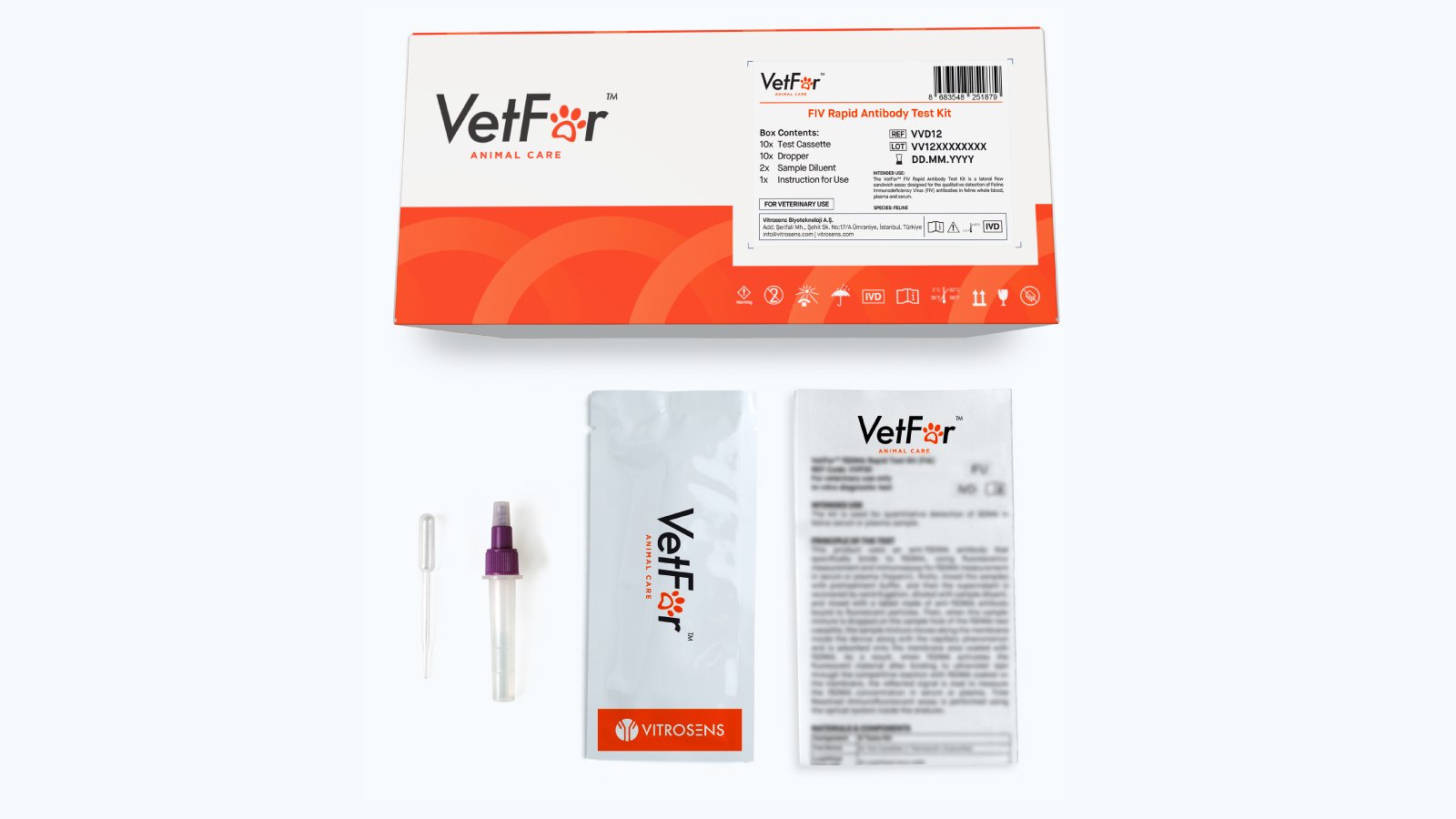
The introduction of rapid test kits has transformed the way veterinarians diagnose FIV. The VetFor™ FIV Rapid Antibody Test Kit is a user-friendly, reliable tool designed for quick detection of FIV antibodies in feline blood, plasma, or serum samples. This test is specifically intended for professional veterinary use and offers numerous benefits to improve the efficiency of diagnostics.
The kit employs a lateral flow chromatographic immunoassay technique to detect FIV antibodies. This method involves applying a small sample to the test cassette, where antibodies, if present, interact with antigens and create visible lines for interpretation. The simplicity of this process allows veterinarians to obtain results in as little as 10 minutes.
By integrating rapid test kits into routine veterinary protocols, practitioners can streamline their diagnostic processes. This is especially valuable in high-pressure clinical environments where time is of the essence. Moreover, the portability and ease of use of these kits make them suitable for field applications, extending their utility to remote or under-resourced locations.
Benefits of Using Rapid Test Kits:
- Speed and Efficiency: Results are available within minutes, enabling quicker decision-making.
- Versatility: The kit works with whole blood, plasma, and serum, accommodating different sample types.
- Portability: Compact design allows for easy use in various settings, from clinics to field environments.
- Minimized Equipment Needs: The test requires no specialized tools, making it accessible and convenient for all veterinary professionals.
Practical Tips for Using FIV Antibody Rapid Test Kits Effectively
While FIV rapid test kits are designed for simplicity, proper handling and adherence to guidelines are critical to obtaining accurate results.
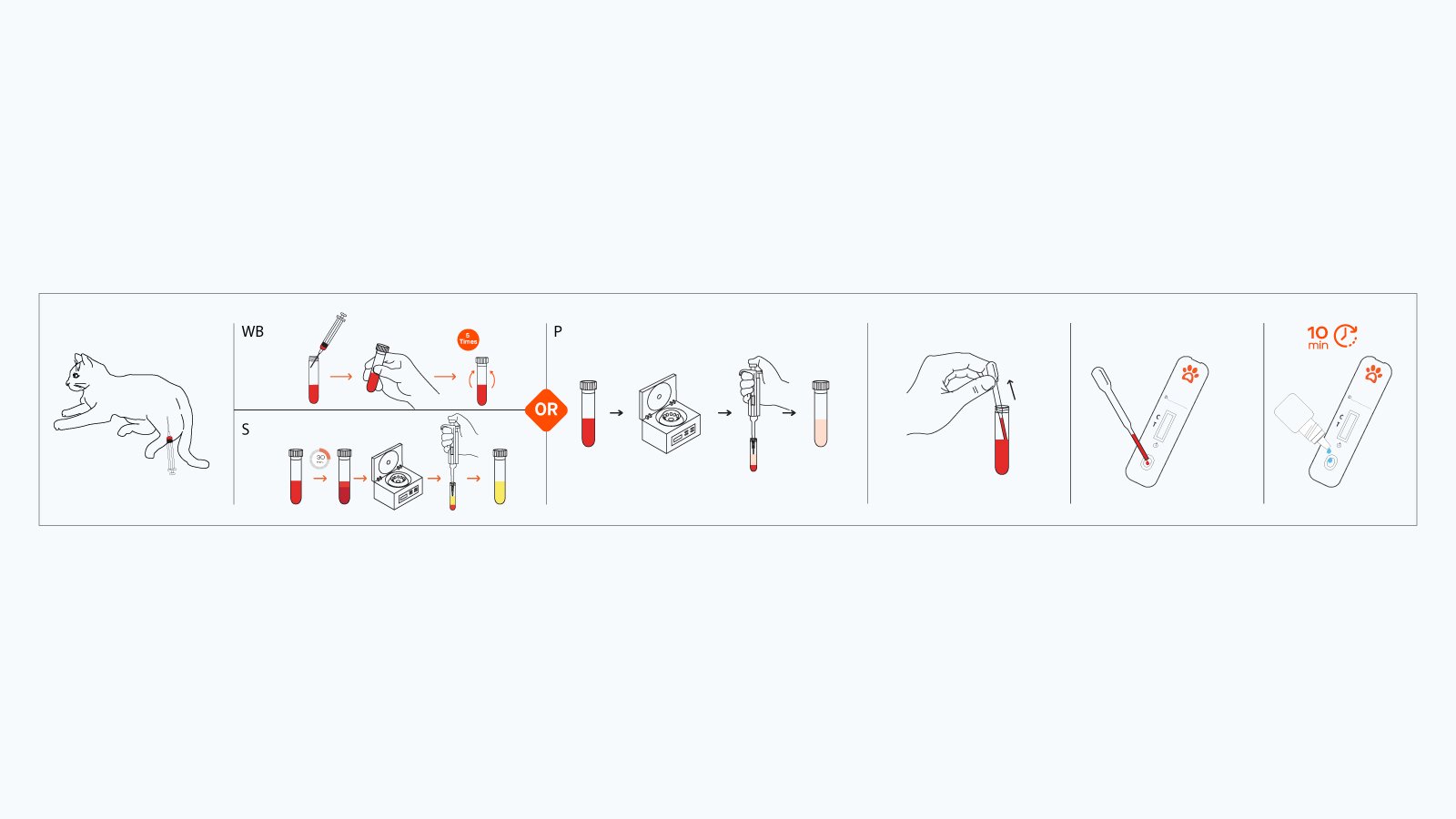
Collecting an adequate and uncontaminated sample is the first step. Using a sterile syringe, draw 10–50 μL of whole blood from the cat, ensuring the collection site is clean and sterile. If the test cannot be performed immediately, store the sample at 2–8°C in an anticoagulant tube for up to 24 hours. Plasma or serum samples can also be used following centrifugation of whole blood.
For best results, avoid using hemolytic or bacterially contaminated samples, as these can affect test accuracy. Always handle specimens with care and follow biosafety protocols to ensure the safety of both the veterinarian and the animal.
Conducting the Test:
- Allow the test kit and sample to reach room temperature before starting.
- Place the test cassette on a clean, flat surface and add one drop (10 μL) of the sample to the designated well.
- Add two drops of buffer solution to the same well.
- Wait 5–10 minutes and read the results.
- a. Positive: Both the control (C) and test (T) lines appear.
- b. Negative: Only the control (C) line appears.
- c. Invalid: The absence of the control line indicates an error, requiring a retest.
The Importance of Rapid Testing in FIV Management
FIV is a lifelong condition with no definitive cure. However, early diagnosis plays a crucial role in managing the disease and improving the quality of life for infected cats. By identifying FIV-positive cases promptly, veterinarians can develop tailored care plans that focus on nutrition, monitoring secondary infections, and reducing stress to support the cat’s immune health.
Additionally, diagnosing FIV helps prevent the spread of the virus, especially in multi-cat households or catteries. For uninfected cats, preventative measures such as keeping them indoors or away from aggressive cats can significantly lower the risk of exposure.
The VetFor FIV Rapid Antibody Test Kit empowers veterinarians with the tools they need to quickly identify and manage FIV cases, ultimately benefiting feline populations and their caretakers
FIV remains a significant challenge in feline healthcare, but advancements in diagnostic tools like rapid antibody test kits have greatly improved detection and management capabilities. The VetFor FIV Rapid Antibody Test Kit offers a reliable, efficient, and accessible solution for veterinarians, ensuring better outcomes for affected cats and their communities.
By integrating rapid testing into regular veterinary practice, professionals can provide timely care, limit disease transmission, and enhance the overall well-being of cats under their care.
References
- Hartmann, K. (2011). “Clinical aspects of feline retroviruses: A review.” Viruses, 3(11), 2459–2503.
- Levy, J. K., Crawford, P. C., Slater, M. R., Tucker, S. J., Crawford, C., MacDonald, K., & Hartmann, K. (2008). “Infectious diseases of cats and dogs: Feline immunodeficiency virus.” Compendium: Continuing Education for Veterinarians, 30(3), 175–187.
- Hosie, M. J., Addie, D., Belák, S., Boucraut-Baralon, C., Egberink, H., Frymus, T., … & Truyen, U. (2009). “Feline immunodeficiency. ABCD guidelines on prevention and management.” Journal of Feline Medicine and Surgery, 11(7), 575–584.
- Little, S. E., Sears, W., Lachtara, J. L., & Bienzle, D. (2009). “Seroprevalence of feline leukemia virus and feline immunodeficiency virus infection among cats in Canada.” The Canadian Veterinary Journal, 50(6), 644–648.