


What Is Canine Leishmaniosis?
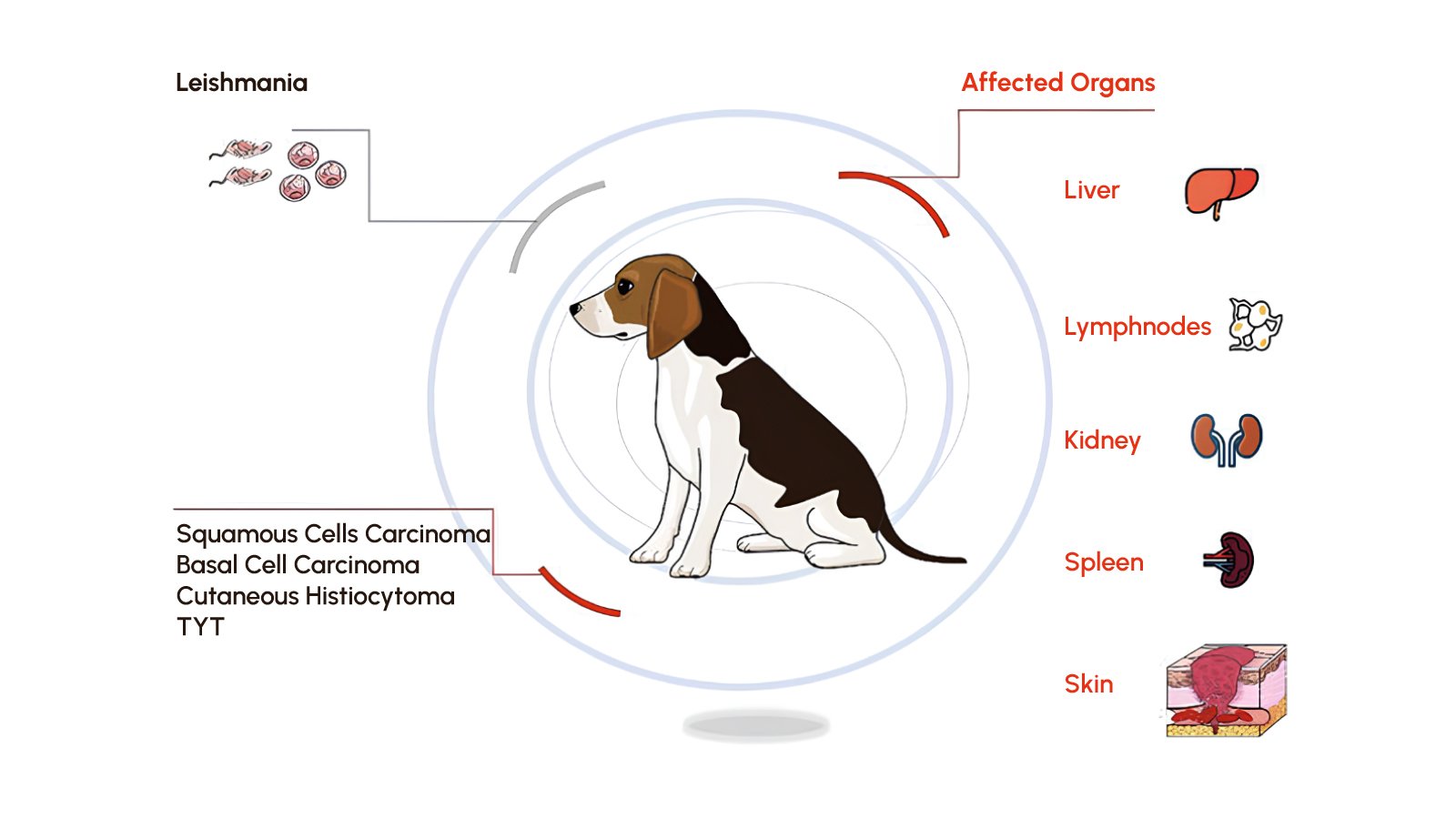
Canine leishmaniosis is a vector-borne disease primarily associated with Leishmania infantum, a protozoan parasite transmitted mainly through the bites of infected phlebotomine sand flies. Dogs are particularly important hosts for L. infantum, and infection may remain clinically silent for a period of time or develop into a disease affecting several organs and body systems.
What Clinical Signs Can Dogs Show?
Clinical presentation can vary considerably between dogs. Possible signs include weight loss, enlarged lymph nodes, skin lesions, hair loss, reduced appetite, lethargy, eye abnormalities, and changes affecting the nails. In some dogs, the disease may also involve internal organs, particularly the kidneys. Importantly, infected dogs do not always show obvious clinical signs.
Because these findings are not specific to leishmaniosis, they cannot confirm infection or clinical disease on their own. Veterinary assessment may therefore include clinical history, physical examination and appropriate laboratory testing.
Why Are Leishmania Antibodies Tested?
Serological tests detect antibodies produced by the immune system following exposure to Leishmania. Antibody findings can provide useful information when evaluating dogs with compatible clinical signs or relevant epidemiological exposure.
However, the presence of antibodies should not be interpreted as proof of active clinical disease on its own. Serological findings should be considered together with clinical signs, epidemiological history and, when necessary, additional diagnostic methods.
Important: Clinical signs and antibody results should always be interpreted by a veterinary professional within the overall clinical context.
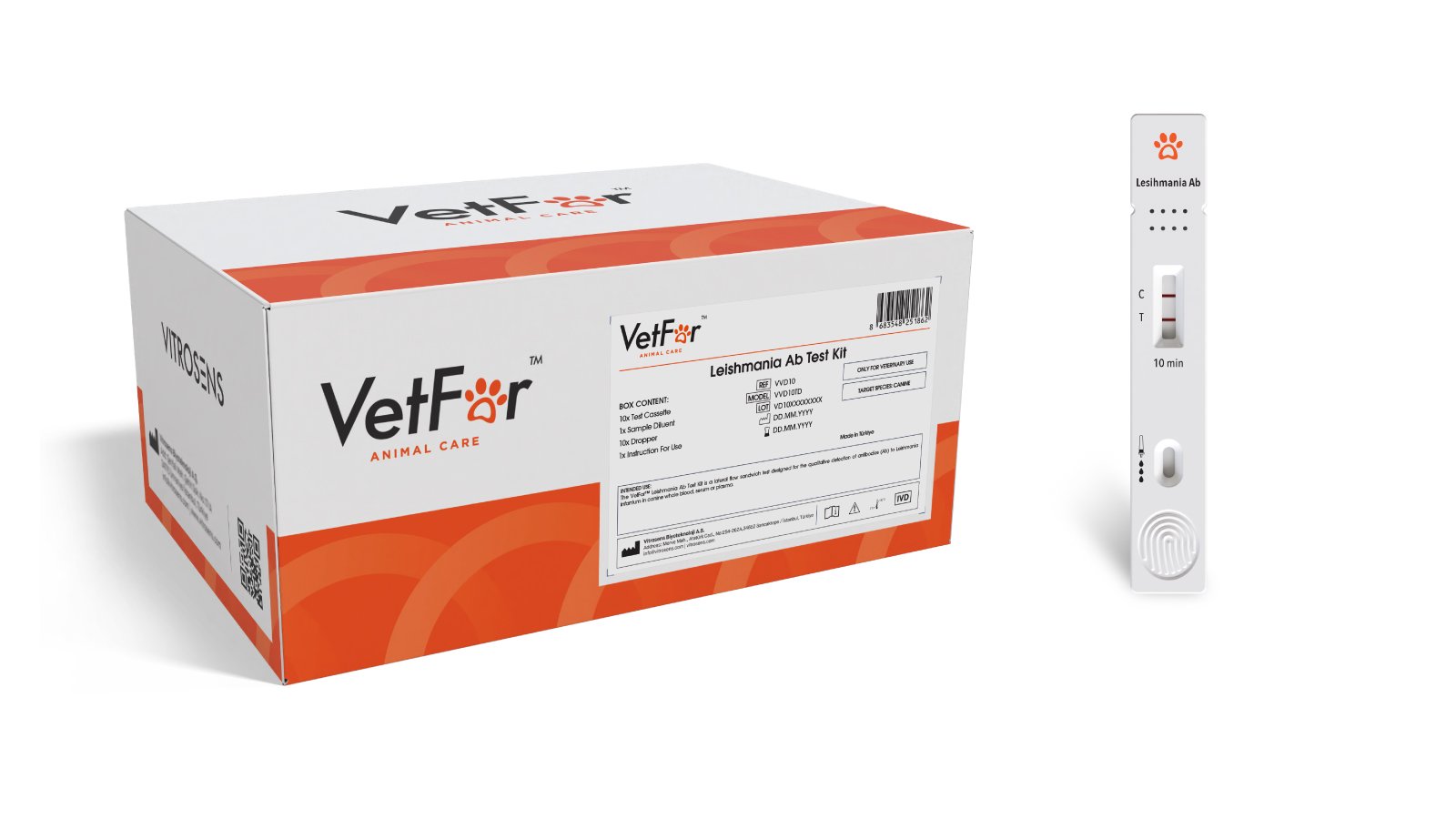
VetFor™ Leishmania Ab Test Kit
The VetFor™ Leishmania Ab Test Kit uses lateral flow technology to qualitatively detect antibodies (Ab) to Leishmania infantum in canine whole blood, serum, or plasma samples.
The test provides veterinary professionals with a qualitative antibody result that they can evaluate together with the animal’s clinical signs, history, and other relevant diagnostic findings.
Canine leishmaniosis can present differently from one dog to another, making careful clinical evaluation particularly important. Combining observations from the physical examination with the animal’s history and appropriate laboratory findings can help veterinarians build a more complete picture of the case.
For more information about the VetFor™ Leishmania Ab Test Kit and our veterinary diagnostic solutions, please contact us at contact@vitrosens.com or explore the VetFor™ Product Catalog to discover our full veterinary portfolio.
References
World Organisation for Animal Health (WOAH). Terrestrial Manual – Leishmaniosis. Information on canine leishmaniosis, clinical presentation and laboratory diagnosis.
World Organisation for Animal Health (WOAH). Terrestrial Animal Health Code – Infection with Leishmania spp. Guidance on interpretation of laboratory evidence, including antibody detection, in the appropriate clinical or epidemiological context.
Solano-Gallego L. et al. Directions for the diagnosis, clinical staging, treatment and prevention of canine leishmaniosis. Veterinary Parasitology. 2009.
European Food Safety Authority (EFSA). Scientific Opinion on Canine Leishmaniosis. EFSA Journal. 2015.