

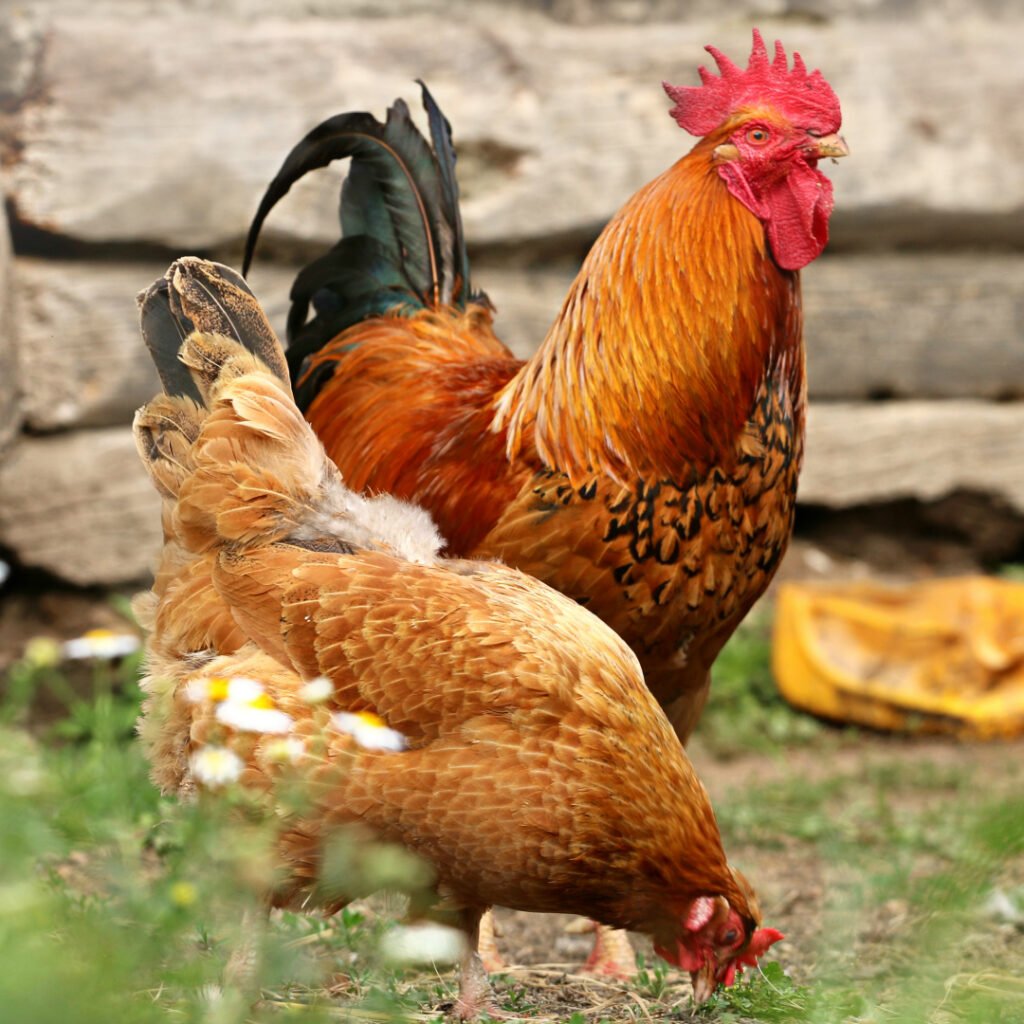
Newcastle Disease (ND) is a highly contagious viral disease affecting domestic poultry and many other bird species. Depending on the virulence of the virus and the susceptibility of the affected birds, outbreaks may cause severe disease and considerable losses in poultry populations. In particular, chickens are susceptible to severe forms of the disease.
However, the severity of Newcastle Disease can vary according to several factors, including the viral strain, host species, age, immune status, and overall health of the bird.
How Does Newcastle Disease Spread?
NDV can spread through direct contact with infected birds and through exposure to respiratory secretions or fecal material. In addition, contaminated feed, water, equipment, clothing, and other fomites may also contribute to transmission between birds or poultry facilities.
Good biosecurity therefore plays an important role in reducing the movement of infectious material between flocks.
Although Newcastle Disease is primarily an animal health concern, WOAH classifies it as a minor zoonosis. Nevertheless, human infections are uncommon and have generally been associated with direct exposure to infected birds or virus-containing material, most often resulting in mild, self-limiting conjunctivitis.
What Are the Signs of Newcastle Disease in Chickens?
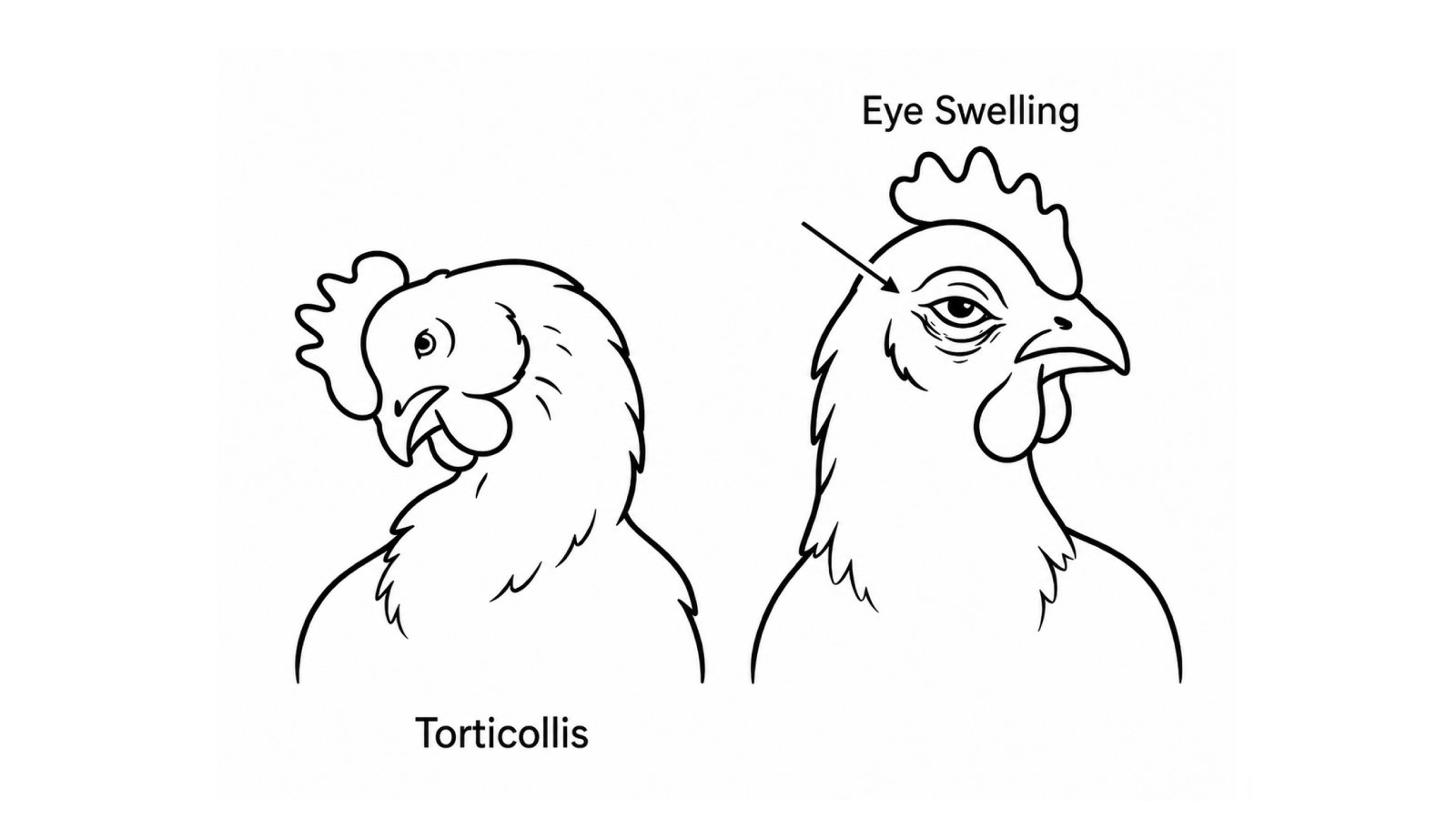
There is no single clinical sign that confirms Newcastle Disease. Depending on the form and severity of infection, affected birds may show:
Respiratory signs
• Respiratory difficulty or abnormal breathing
• Nasal or oral discharge
General and digestive signs
• Reduced activity and depression
• Loss of appetite
• Watery or greenish diarrhea
Neurological signs
• Tremors or convulsions
• Torticollis
• Paralysis or other neurological abnormalities
Production and mortality changes
• Reduced egg production
• Increased mortality in severe outbreaks
Moreover, clinical presentation can vary considerably, and some signs overlap with other important poultry diseases. Laboratory testing is therefore an important part of veterinary investigation when Newcastle Disease is suspected.
Important: Clinical signs alone cannot confirm Newcastle Disease. Suspected cases should be evaluated by veterinary professionals together with epidemiological information and appropriate laboratory findings.
VetFor™ NDV Ag Test Kit
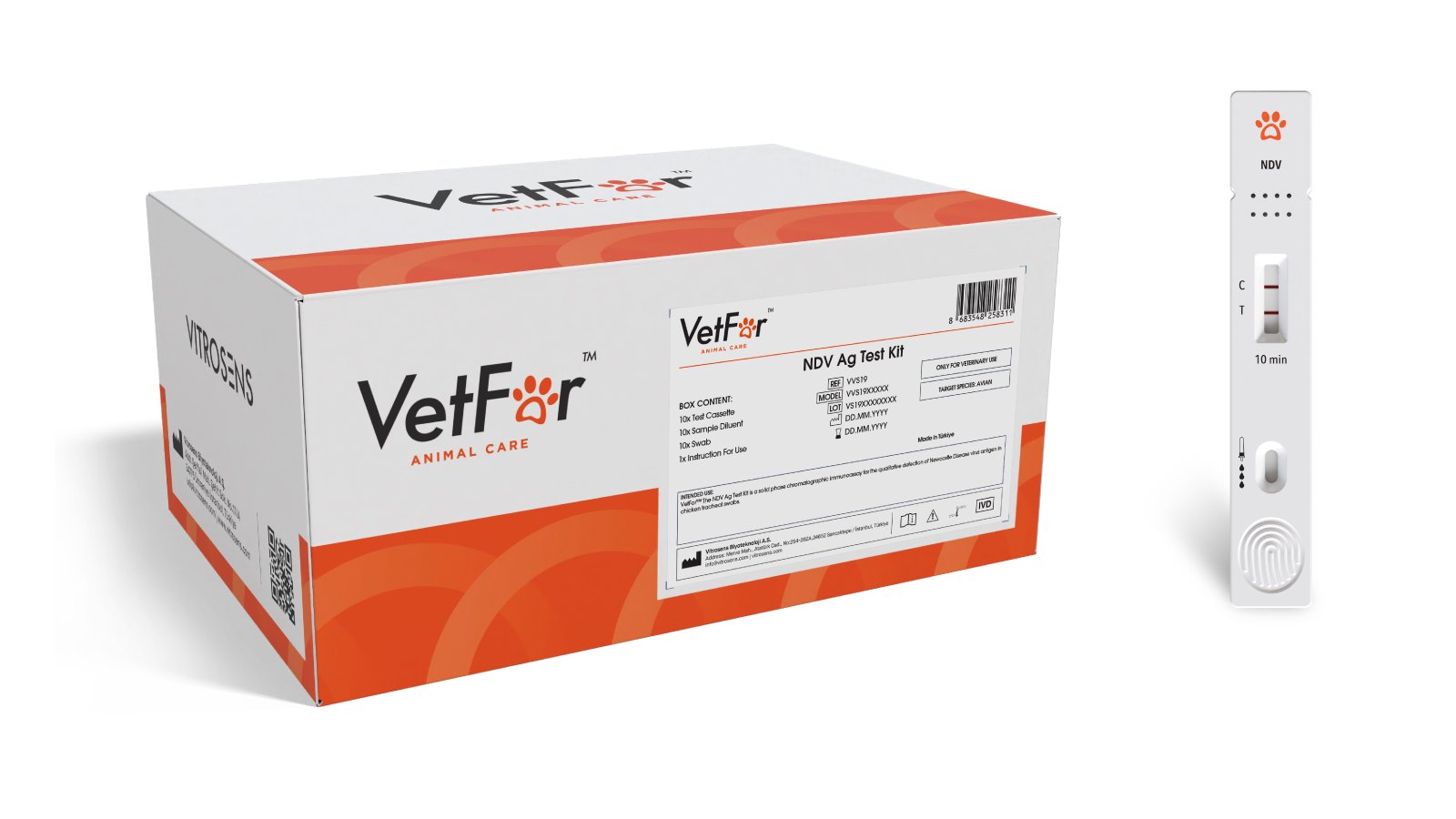
The VetFor™ NDV Ag Test Kit is a solid-phase lateral flow immunochromatographic assay designed for the qualitative detection of Newcastle Disease Virus (NDV) antigen in chicken tracheal swab samples.
The test provides results in approximately 10 minutes, supporting veterinary professionals with a qualitative NDV antigen result that can be considered alongside clinical signs, flock history, epidemiological findings, and other relevant diagnostic information.
How Does the Test Work?
The VetFor™ NDV Ag Test Kit uses a lateral flow immunochromatographic principle. When NDV antigen is present in the sample, it interacts with specific antibodies as the sample migrates along the test membrane, leading to the appearance of a visible test line.
A separate control line indicates that the test procedure has functioned correctly. If the control line does not appear, the result is considered invalid and the sample should be retested with a new device.
Test results should always be interpreted by veterinary professionals together with the clinical and epidemiological context.
Protecting Poultry Health Requires the Complete Picture
Because Newcastle Disease can spread rapidly and may present with respiratory, digestive, or neurological signs, careful flock observation, biosecurity practices, and appropriate veterinary diagnostic methods are important components of poultry health management.
For more information about the VetFor™ NDV Ag Test Kit and our veterinary diagnostic solutions, contact us at contact@vitrosens.com or explore the VetFor™ Product Catalog to discover our full veterinary portfolio.
References
World Organisation for Animal Health (WOAH). Newcastle Disease. Information on transmission, susceptible species, clinical presentation, economic impact, and public health considerations.
World Organisation for Animal Health (WOAH). Terrestrial Manual – Newcastle Disease. Information on Newcastle Disease virus, laboratory diagnosis, and human exposure.
Food and Agriculture Organization of the United Nations (FAO). Newcastle Disease: A Technology Review – Diagnosis of Newcastle Disease. Information on clinical signs and disease recognition in poultry.
Food and Agriculture Organization of the United Nations (FAO). Newcastle Disease Virology and Epidemiology. Information on transmission, clinical presentation, and epidemiological characteristics of NDV.