


Trichomonas foetus is a microscopic protozoan parasite that can affect different species in different ways. In cattle, it is best known for reducing reproductive performance through early pregnancy loss and infertility. In cats, it is an important cause of chronic large-bowel diarrhea, particularly in young animals and multi-cat environments. Because some infected animals show mild signs or none at all, laboratory confirmation is essential for accurate case management and control.
What is Trichomonas foetus?
Trichomonas foetus is a motile, flagellated organism that lives on mucosal surfaces. In cattle it primarily colonizes the reproductive tract, especially in bulls where it can persist without obvious clinical signs. In cats it most commonly colonizes the distal intestinal tract, where it can trigger inflammation and ongoing gastrointestinal signs.
How infection spreads
Transmission depends on the host. In cattle, the parasite spreads mainly through breeding, and long-term carriage in bulls can maintain infection within a herd. In cats, transmission is typically fecal-oral, and exposure risk rises in crowded housing where litter boxes are shared and stress is higher. These differences matter because control strategies are very different between herd-level reproductive disease and household-level enteric disease.
Clinical signs to recognize
In cattle, suspicion often starts with herd patterns rather than a single striking symptom. Producers and veterinarians may notice repeat breeding, longer calving intervals, more open cows at pregnancy check, or early embryonic loss. Bulls are usually asymptomatic, which is why targeted testing of breeding bulls is central to prevention and outbreak control.
In cats, the most typical presentation is chronic or intermittent diarrhea with increased frequency and urgency. Stools may be soft, malodorous, and sometimes contain mucus, and some cats strain or have accidents outside the litter box. Many affected cats remain bright and active, so the problem can be mistaken for dietary sensitivity or other intestinal parasites unless testing is performed.
Why lab testing matters
Trichomonas organisms can be difficult to confirm by appearance alone. A direct fecal smear may detect motile organisms in some cases, but sensitivity can be low and depends heavily on sample freshness and observer experience. Culture can improve detection but takes time and may still miss low-level infections. Molecular methods such as PCR are widely used because they detect parasite DNA and can be more sensitive when organism numbers are low or when clinical signs fluctuate.
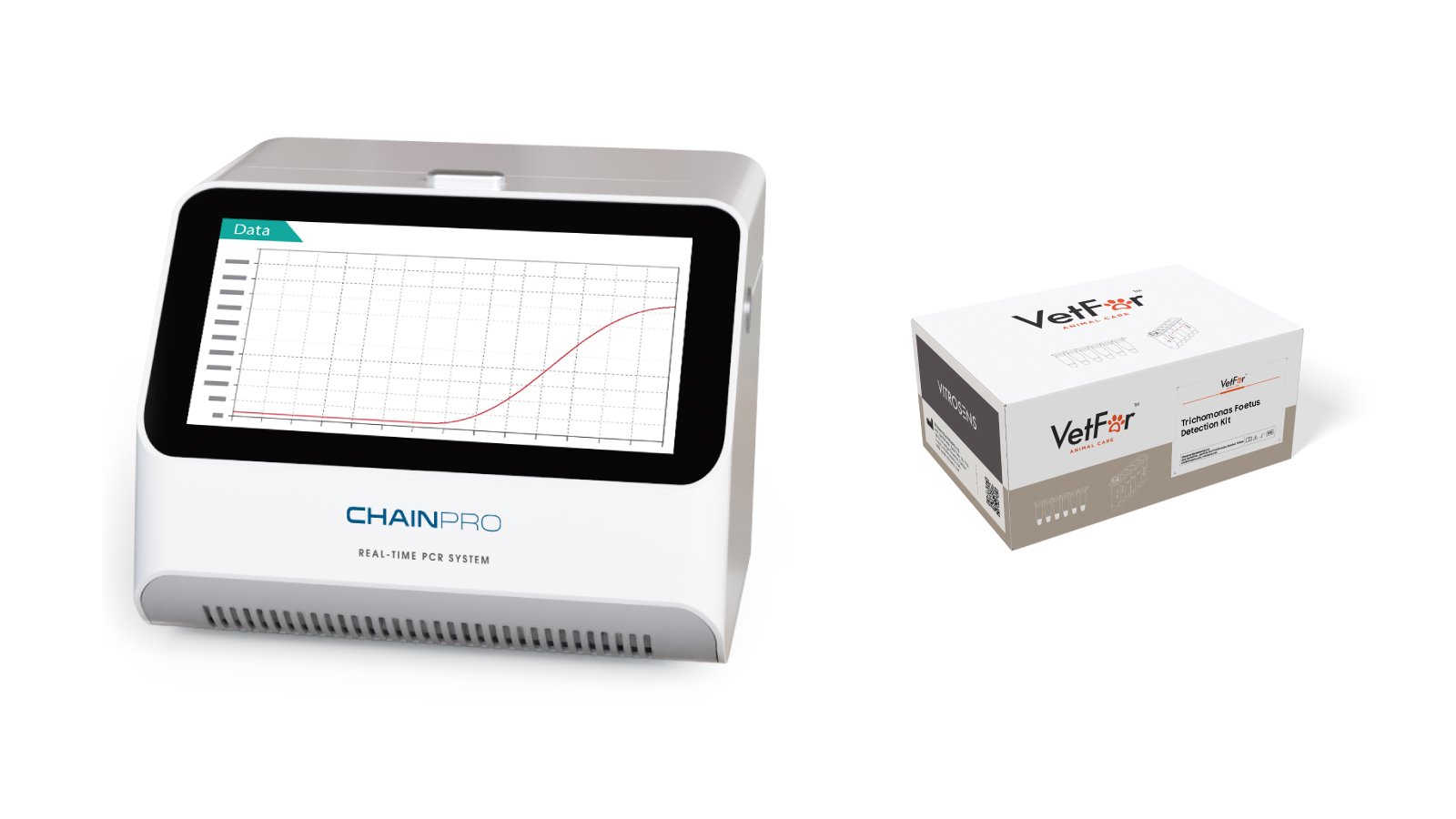
VetFor Trichomonas foetus Detection Kit by Vitrosens
The VetFor Trichomonas foetus Detection Kit by Vitrosens is designed to support reliable identification of Trichomonas foetus from clinical samples. Timely confirmation helps veterinarians distinguish trichomonosis from other common causes of diarrhea in cats or reproductive inefficiency in cattle, enabling more appropriate decisions for treatment planning, isolation or hygiene measures, and herd breeding management.
Sampling tips for better results
In cats, testing is most informative when samples are fresh and collected properly, such as a recent fecal sample or a rectal swab obtained by a veterinarian. In cattle, correct technique and adherence to local guidance for preputial sampling in bulls are critical, because poor sampling can reduce the chance of detection even when infection is present. In all cases, good sample handling and prompt processing help improve test reliability.