


Canine C reactive protein (cCRP) is one of the main acute phase proteins in dogs and is widely used as a sensitive marker of systemic inflammation. Its concentration can increase rapidly in response to inflammatory stimuli and may decline again as the underlying condition improves. This makes cCRP useful not only for detecting inflammation, but also for monitoring clinical progress over time. However, cCRP is not disease specific, so results should always be interpreted together with physical examination findings, patient history, and other laboratory data.

Why cCRP Matters in Clinical Practice
In veterinary practice, cCRP testing can support the evaluation of dogs with infection, inflammatory disorders, tissue injury, postoperative inflammation, and other systemic conditions. Because cCRP can respond quickly to inflammatory change, it may help clinicians recognize active inflammation even when other routine findings are limited or nonspecific. For this reason, it is often used as an adjunct marker to assess disease activity, estimate severity, and follow treatment response.
When Serial cCRP Testing Is Useful
One of the main clinical advantages of cCRP is its value in serial measurement. Repeated testing can help veterinarians determine whether inflammation is increasing, remaining stable, or resolving. This can be useful during treatment follow up, especially in cases where clinical signs are vague, fluctuate over time, or improve more slowly than expected. A changing cCRP trend may provide additional context when evaluating therapeutic response and overall patient status.
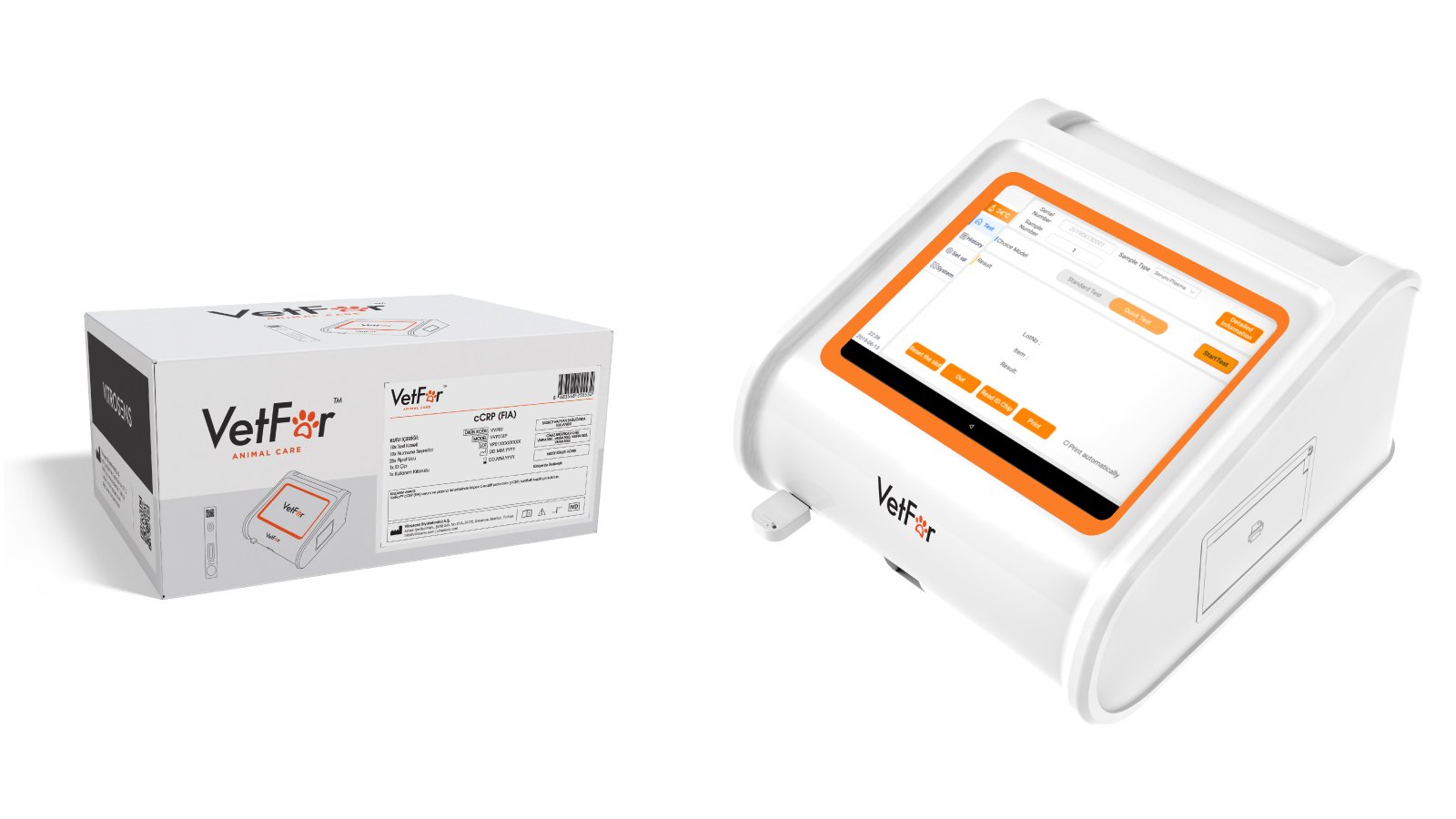
Diagnostic Support with VetFor VVP01 cCRP Rapid Test Kit (FIA)
VetFor VVP01 cCRP Rapid Test Kit (FIA) is a fluorescent immunoassay designed for the quantitative determination of cCRP in canine serum and plasma samples. The test is intended to support veterinary professionals in identifying systemic inflammation, assessing disease severity, and evaluating treatment success. Used with the VetFor Immunofluorescent Analyzer, it offers a rapid and practical option for in clinic measurement of canine cCRP, helping practitioners obtain objective data within a routine diagnostic workflow.
Clinical Interpretation
An increased cCRP result indicates the presence of an inflammatory response, but it does not by itself identify the exact cause. Elevated values should therefore be interpreted as part of a broader diagnostic approach rather than as a stand alone etiologic finding. In clinical use, cCRP is most valuable when combined with other diagnostic information and when followed over time to monitor the course of disease and the effect of treatment.
Referances
Malin K, Witkowska-Piłaszewicz O, Cywińska A. C-Reactive Protein as a Diagnostic Marker in Dogs: A Review. Veterinary Sciences. 2022.
Covin MA, Steiner JM. Measurement and clinical applications of C-reactive protein in veterinary medicine. Veterinary Clinical Pathology. 2022.
Cray C, Zaias J, Altman NH. Acute phase proteins in animals. Veterinary Clinical Pathology. 2012.
Cerón JJ, Eckersall PD, Martínez-Subiela S. Acute phase proteins in dogs and cats: current knowledge and future perspectives. Veterinary Clinical Pathology. 2005.