


Feline free thyroxine (fFT4) is a useful thyroid marker in cats, especially when hyperthyroidism is suspected but the diagnostic picture is not yet straightforward. Hyperthyroidism is most common in older cats, usually over 7 years of age, and typical signs include weight loss despite a good appetite, hyperactivity, increased vocalization, vomiting, increased stool volume, and polyuria or polydipsia.
Why fFT4 Matters
Free T4 reflects the unbound fraction of circulating thyroxine and can be more sensitive than total T4 in cats with mild or early hyperthyroidism. In one widely cited review, free T4 measured by equilibrium dialysis was elevated in more than 98% of hyperthyroid cats. However, higher sensitivity comes with lower specificity, and false positive increases can occur in euthyroid cats, particularly in cats with nonthyroidal illness. For that reason, fFT4 is not considered a stand alone screening test.
When Should a Cat Be Tested?
fFT4 testing is most useful when a cat has clinical signs compatible with hyperthyroidism but total T4 is still within the reference interval or at the high end of normal. It is also relevant when thyroid disease remains suspicious after initial screening, especially in senior cats, because age related shifts and concurrent illness can complicate interpretation of total T4 alone. Current guidance supports using free T4 together with total T4, rather than in isolation, when the diagnosis is uncertain.
Why fFT4 Should Not Be Interpreted Alone
An increased fFT4 result does not automatically confirm feline hyperthyroidism. Free T4 may be falsely elevated in some sick but euthyroid cats, so interpretation should always include clinical findings, physical examination, and total T4 results. A high normal or borderline total T4 together with an increased fFT4 can support hyperthyroidism in the right clinical setting, whereas low or low normal total T4 with increased fFT4 is more often associated with nonthyroidal illness.
Diagnostic Support with VetFor VVP38 fFT4 (FIA)
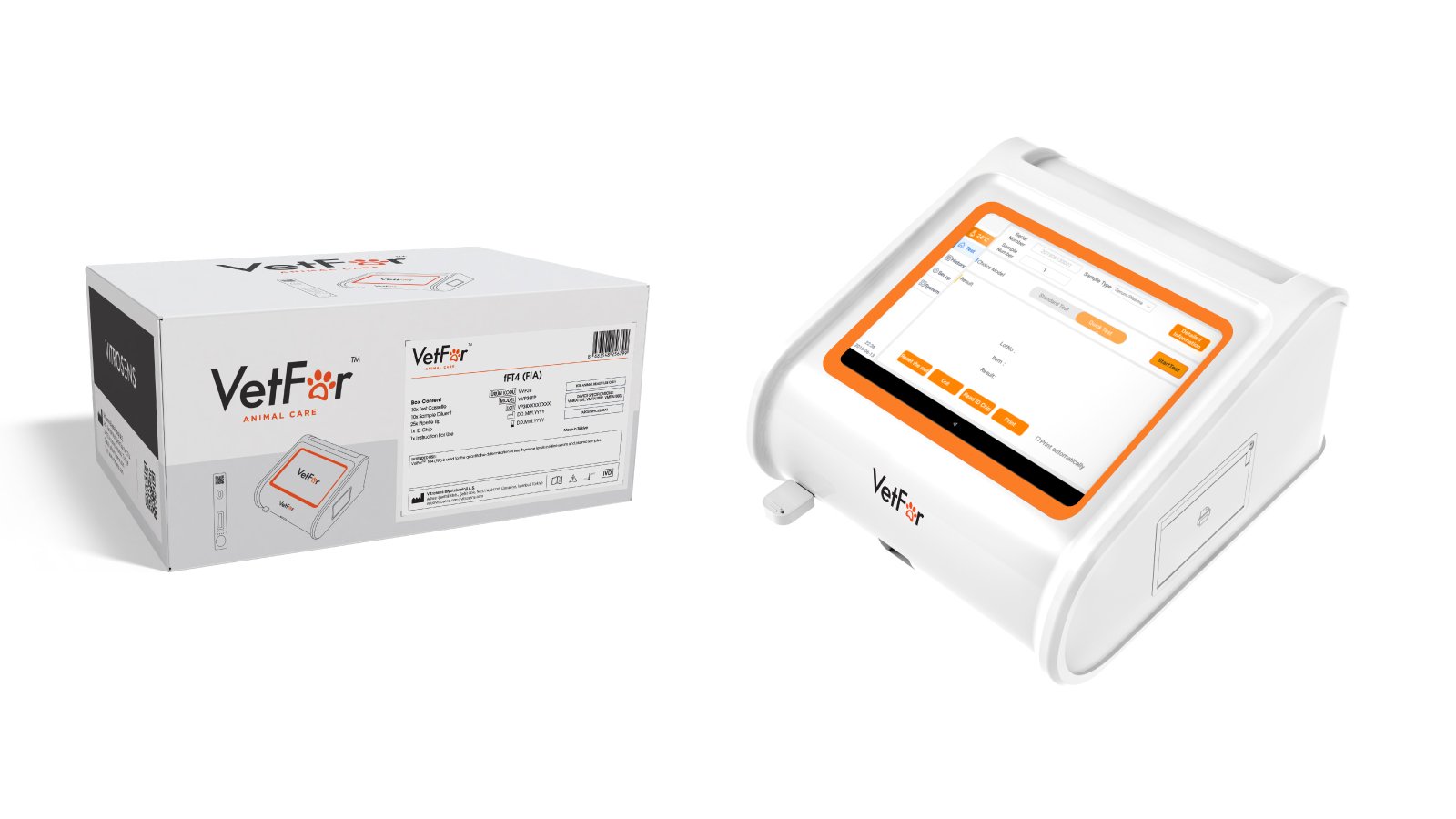
VetFor lists VVP38 fFT4 (FIA) in its animal health catalog as a feline FIA thyroid assay with a stated detection range of 0.1–4.5 ng/dL. VetFor also describes FIA hormone testing as a quantitative method that supports objective measurement, fast turnaround, and practical in clinic decision making. In that setting, VVP38 fFT4 (FIA) can be positioned as a rapid diagnostic support tool when thyroid dysfunction is suspected and a more complete thyroid assessment is needed.
Clinical Value in Practice
In daily practice, feline fFT4 testing is best used as part of a broader thyroid workup rather than as a single deciding parameter. It can help clarify equivocal cases, support earlier recognition of hyperthyroidism, and add value when clinicians are assessing cats with compatible signs but inconclusive first line results. The result is most meaningful when integrated with total T4, clinical history, and overall patient assessment.
References
- Carney HC, Ward CR, Bailey SJ, et al. 2016 AAFP Guidelines for the Management of Feline Hyperthyroidism.
- MSD Veterinary Manual. Hyperthyroidism in Animals.
- Peterson ME. Diagnostic Testing for Feline Thyroid Disease: Hyperthyroidism.