


Cats are experts at hiding discomfort. A skipped meal, an unusually quiet afternoon, or a little less interest in play may initially seem insignificant. However, subtle changes in appetite, energy, or behavior can sometimes be the first indication of an underlying health problem.
Feline pancreatitis is one condition that can be particularly difficult to recognise because affected cats do not always show clear or specific symptoms. Understanding the role of the pancreas, recognising possible clinical signs, and using appropriate diagnostic methods can support a more complete veterinary evaluation.
What Is Feline Pancreatitis?
The pancreas is a small organ located in the abdomen. It performs two important functions: it produces hormones such as insulin, which help regulate blood glucose, and digestive enzymes that help the body process fats, proteins, and carbohydrates.
Pancreatitis occurs when the pancreas becomes inflamed. The condition may be acute, with signs appearing relatively suddenly, or chronic, with milder or recurring signs developing over time. Its severity can vary considerably between cats.
Why Can Pancreatitis Be Difficult to Recognise in Cats?
Unlike some diseases that produce distinctive symptoms, feline pancreatitis frequently causes vague clinical signs. Cats may also naturally conceal pain or illness, making early changes difficult for owners to notice.
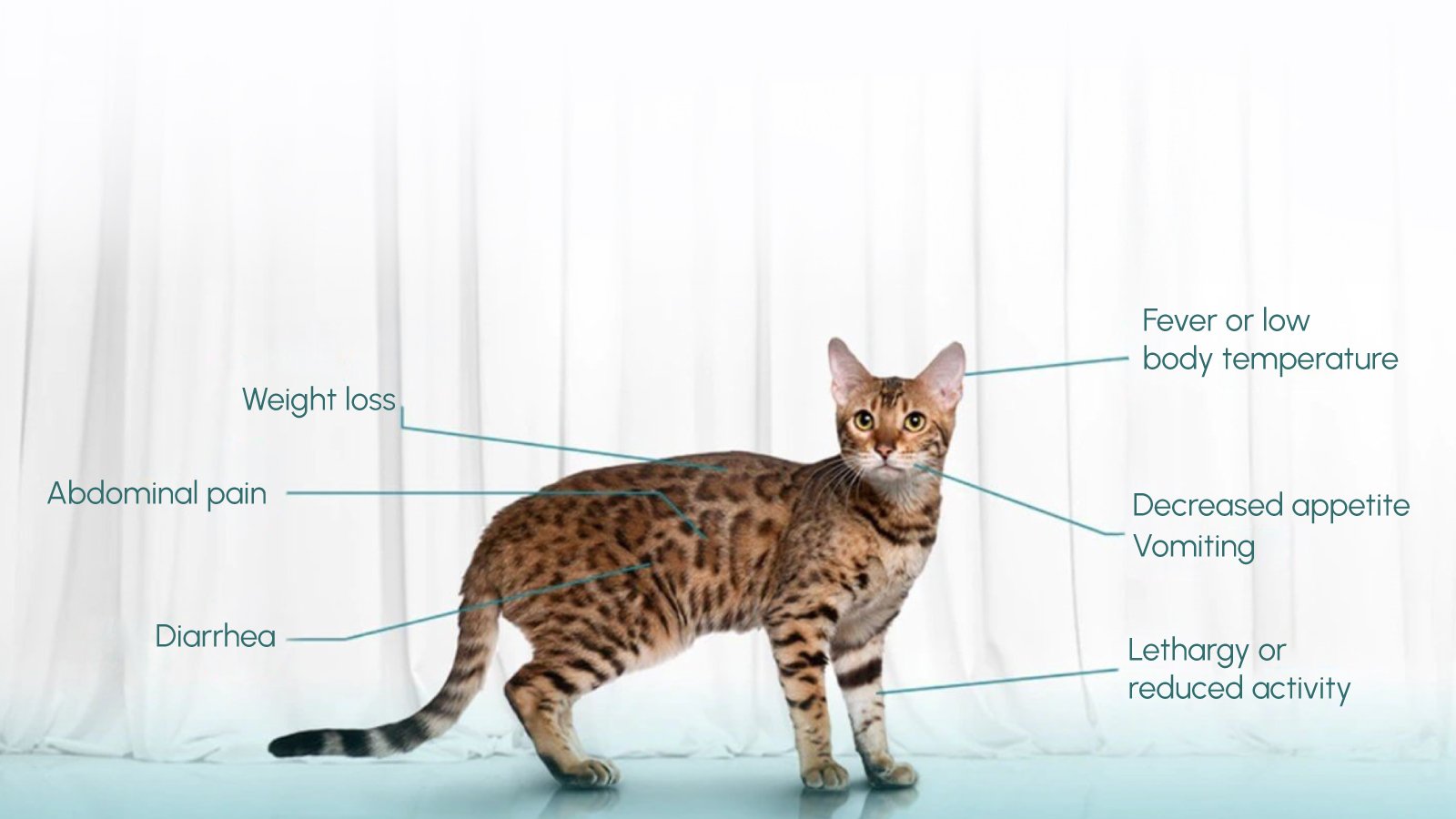
Not every cat experiences the same signs. Some cats with chronic pancreatitis may show only mild changes, while cats with severe acute disease can become seriously ill within a short period. Vomiting and obvious abdominal pain are not present in every feline case, so their absence does not necessarily exclude pancreatic disease.
Important: These signs are not specific to pancreatitis and may occur with several other feline conditions. They cannot confirm a diagnosis on their own.
- How Is Feline Pancreatitis Evaluated?
There is no single finding that definitively identifies every case of feline pancreatitis. Veterinarians generally evaluate the cat’s clinical history, physical examination findings, laboratory results, and diagnostic imaging together.
A complete blood count and biochemical profile may help identify changes associated with dehydration, inflammation, electrolyte imbalance, or concurrent disease. However, routine blood test abnormalities are often nonspecific.
Abdominal ultrasonography may reveal pancreatic enlargement, changes in surrounding tissues, inflammation, or fluid accumulation. Nevertheless, ultrasound findings can vary according to disease severity, timing, equipment, and operator experience.
What Is Feline Pancreatic Lipase?
Feline pancreatic lipase, abbreviated as fPL, is a pancreas-associated biomarker measured in blood. Increased fPL concentrations may be associated with pancreatic inflammation and can provide useful information when pancreatitis is suspected.
Research supports feline pancreatic lipase measurement as a valuable component of the diagnostic evaluation of feline pancreatitis. However, false-positive and false-negative results may occur, particularly in mild or chronic cases. An fPL result should therefore not be interpreted independently of the animal’s clinical presentation and other diagnostic findings.
VetFor™ fPL (FIA)
The VetFor™ fPL (FIA) is intended for the quantitative detection of feline pancreatic lipase in feline serum and plasma samples.
The measured fPL concentration is intended to provide veterinary professionals with an additional laboratory finding for the evaluation of cats with suspected pancreatic disease. Results should be interpreted by a veterinarian together with the animal’s clinical signs, medical history, physical examination findings, and other relevant laboratory or imaging results.
The test result alone should not be used to confirm or exclude feline pancreatitis.

Feline pancreatitis can be challenging because its signs often overlap with gastrointestinal, hepatic, endocrine, and other systemic conditions. A cat that is eating less, losing weight, vomiting, or behaving unusually may require a broader clinical investigation rather than assessment based on one symptom or laboratory value.
Because cats cannot tell us when something feels wrong, recognising subtle changes and seeking professional veterinary assessment can make an important difference.
Contact us to learn more about the VetFor™ veterinary diagnostic portfolio.
References
Cornell University College of Veterinary Medicine, Cornell Feline Health Center. Feline Pancreatitis. Overview of pancreatic function, clinical signs, diagnosis, and clinical management.
Xenoulis, P. G. and Steiner, J. M. Canine and Feline Pancreatic Lipase Immunoreactivity. Veterinary Clinical Pathology, 2012.
Forman, M. A. et al. Measurement of Feline-Specific Pancreatic Lipase Aids in the Diagnosis of Pancreatitis in Cats. Journal of the American Veterinary Medical Association, 2023.