


Every year on June 4, National Hug Your Cat Day offers a warm reminder of the bond between cats and their caregivers. June is also widely recognized as Adopt a Cat Month, making it a meaningful time to focus not only on affection, but also on responsible feline health care. For newly adopted cats, kittens, shelter cats or cats living in multi-cat environments, early veterinary evaluation can play an important role in identifying health concerns that may not be obvious at first glance.
A hug may show love, but routine health checks help protect that love. Some infectious agents in cats can be associated with gastrointestinal signs such as diarrhea, vomiting, reduced appetite, lethargy or weight loss. Others may spread more easily in environments where many cats share litter boxes, food bowls or living areas. This is why diagnostic awareness is an important part of feline care, especially after adoption or when introducing a new cat into a household.
Why Newly Adopted Cats May Need Extra Attention?
Adoption is often the beginning of a healthier and safer life for a cat. However, cats coming from shelters, rescue groups, outdoor environments or unknown health backgrounds may have been exposed to infectious agents before arrival. Stress, dietary changes and adaptation to a new home can also make early clinical signs harder to interpret.
In these situations, veterinarians may consider age, vaccination history, clinical signs, exposure risk and living conditions when deciding whether diagnostic testing is needed. Testing can be important for cats of all ages, particularly those with gastrointestinal signs, unknown vaccination status, recent adoption history or exposure to multi-cat environments. For kittens and unvaccinated cats, timely evaluation is especially critical because some infections may progress more rapidly or severely.

-
FCoV: A Common Concern in Multi-Cat Environments
Feline coronavirus (FCoV) is commonly associated with fecal-oral transmission and is particularly relevant in multi-cat households, shelters and catteries. Although many infections may remain mild or subclinical, FCoV detection can support veterinary assessment in cats with gastrointestinal signs or relevant exposure history.
-
FPV: A Serious Viral Threat, Especially for Kittens
Feline panleukopenia virus (FPV) is a highly contagious and potentially severe viral pathogen, especially in kittens and unvaccinated cats. Because clinical signs such as vomiting, diarrhea, lethargy and dehydration may progress rapidly, timely diagnostic evaluation can support appropriate clinical management.
-
Giardia: A Protozoal Cause of Diarrhea in Cats
Giardia is an intestinal protozoan parasite that may cause diarrhea, soft stool, mucus in feces or intermittent gastrointestinal signs in cats. It is especially relevant in young cats, newly adopted cats and multi-cat environments, where fecal contamination may contribute to transmission.
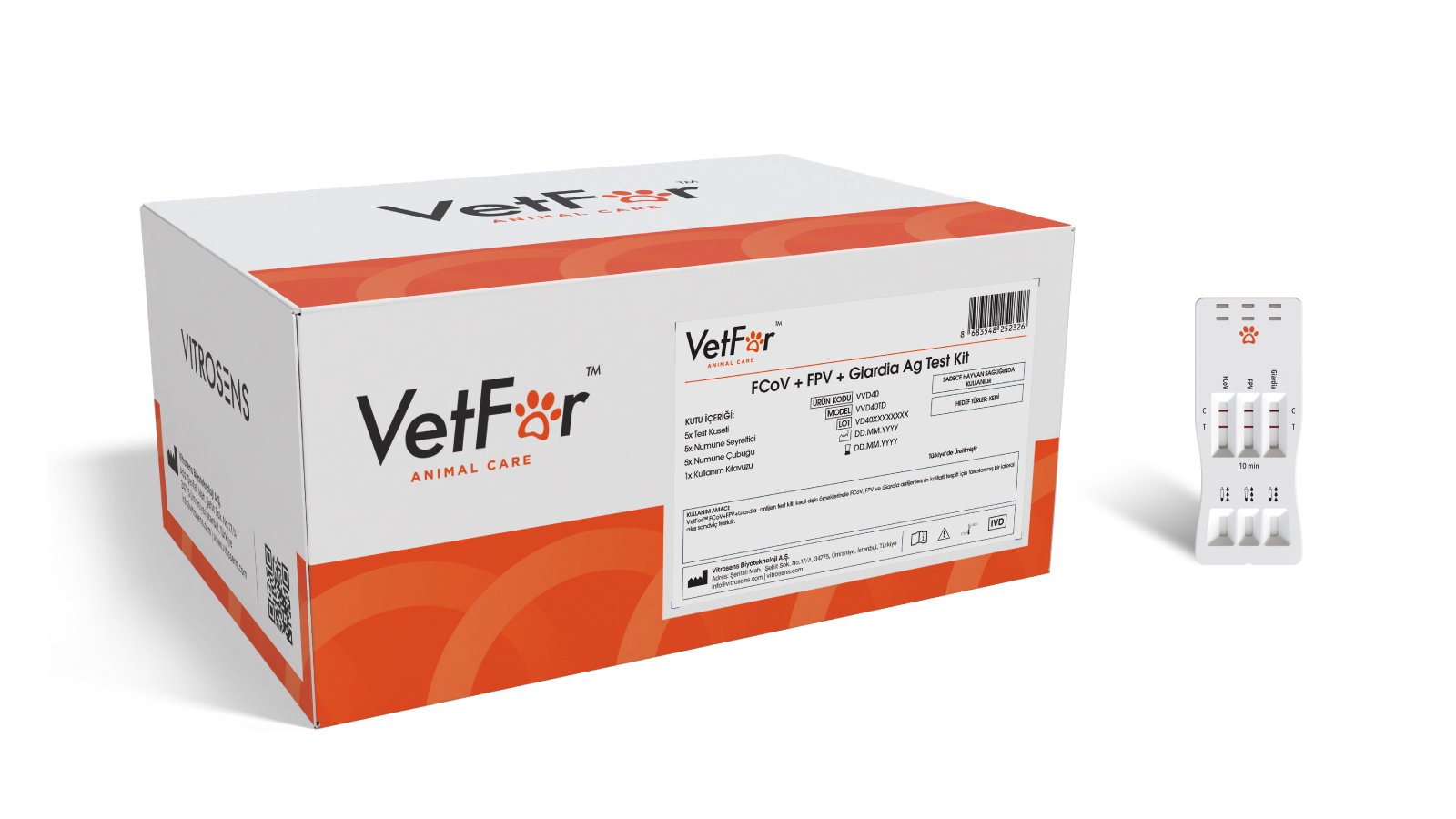
VetFor™ FCoV + FPV + Giardia Ag Test Kit
VetFor™ FCoV + FPV + Giardia Ag Test Kit is designed for the qualitative detection of feline coronavirus antigen, feline panleukopenia virus antigen and Giardia antigen in cat fecal samples.
By supporting the evaluation of important viral and protozoal agents associated with feline gastrointestinal disease, the test can assist veterinarians in the assessment of cats with compatible clinical signs or relevant exposure history. It may be particularly useful in the evaluation of newly adopted cats, kittens, shelter cats and cats living in multi-cat environments.
Test results should be interpreted by veterinarians together with clinical signs, history, vaccination status and other laboratory or diagnostic findings when needed.
References
National Day Calendar. “National Hug Your Cat Day – June 4.” National Day Calendar.
American Humane. “Adopt-A-Cat Month®.” American Humane.
Addie, D.; Belák, S.; Boucraut-Baralon, C.; Egberink, H.; Frymus, T.; Gruffydd-Jones, T.; Hartmann, K.; Hosie, M. J.; Lloret, A. (2009). “Feline infectious peritonitis. ABCD guidelines on prevention and management.” Journal of Feline Medicine and Surgery. 11(7): 594-604. doi:10.1016/j.jfms.2009.05.008.
Companion Animal Parasite Council. “Giardia.” CAPC Guidelines.